

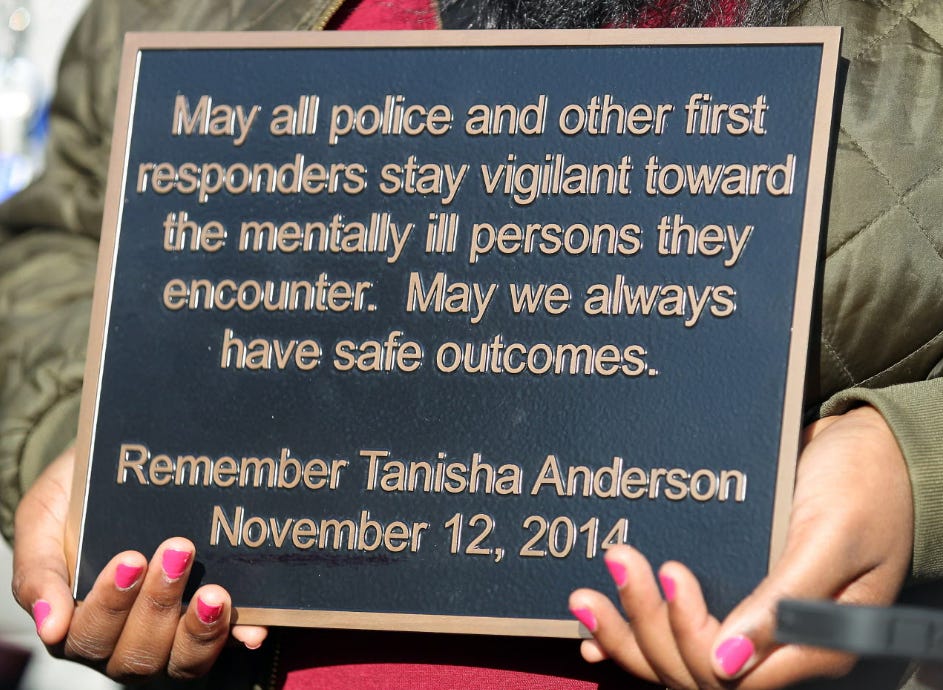
CLEVELAND, Ohio — Passed by Cleveland City Council on Feb. 2, Tanisha’s Law reshapes how the city responds to mental health and substance-use crises, shifting responsibility away from police and toward medical and behavioral health professionals.
The ordinance passed with amendments negotiated with Mayor Justin Bibb’s administration, including the removal of language that would have created a new city department with its own director.
The law is named for Tanisha Anderson, whose death during a police encounter in 2014 was ruled a homicide by the Cuyahoga County Medical Examiner. Anderson’s family called 911 requesting a mental health evaluation as the 37-year-old experienced symptoms of schizophrenia and bipolar disorder.
Detective Scott Aldridge used what police described as a “takedown maneuver,” slamming Anderson face-down onto icy pavement and pinning her with his knee while handcuffing her. After Anderson stopped moving, officers left her on the ground for approximately 21 minutes before calling for an ambulance. She was pronounced dead shortly after arriving at a hospital.
Police initially said Anderson resisted efforts to place her in a patrol car and “inexplicably went limp.” A later civil lawsuit alleged officers used unreasonable and excessive force. A grand jury declined to indict the officers. Aldridge received a 10-day suspension, and Officer Bryan Myers, who was also present, received a written warning.
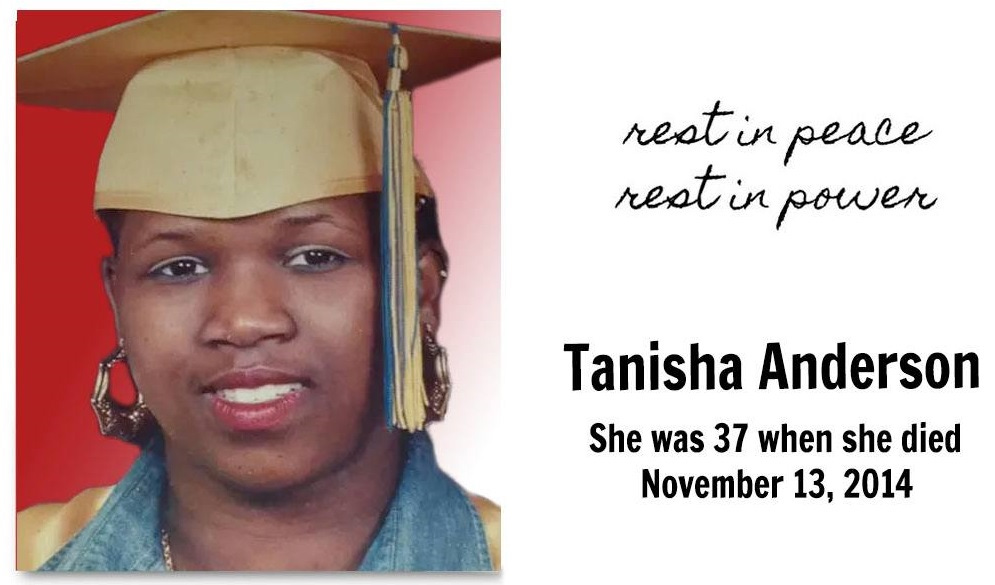
Supporters of Tanisha’s Law argue the case exposed the risks of using police as default responders to mental health emergencies. Police are not trained primarily as medical de-escalators, advocates say, and spend much of their training learning to apply force to resolve confrontations.
Tanisha’s Law establishes a Bureau of Community Crisis Response within the Division of Emergency Medical Services. The bureau will be led by a deputy commissioner and tasked with coordinating the city’s non-police crisis response system.
Under Tanisha’s Law, teams of social workers, behavioral health professionals and peers with lived experience will be dispatched to nonviolent mental health calls, wellness checks and substance-use crises. Mental health clinicians will also be embedded in the 911 call center to help identify appropriate responses and route calls away from police when possible.
Tanisha’s Law also mandates crisis intervention training for all Cleveland police officers and tightens eligibility for Crisis Intervention Team officers, excluding those with histories of excessive force. The ordinance requires annual public reports and the creation of an online dashboard to track outcomes, effectiveness and costs.
The Council on American-Islamic Relations’ Cleveland chapter said police should not be the default responders for vulnerable populations and stressed the need for culturally responsive care. CAIR called the law an important shift toward treating mental health as a medical issue rather than a criminal one.
The Ohio chapter of the National Association of Social Workers described the law as a “major win” for community safety, saying mental health crises require clinical expertise instead of punishment or force. The group urged crisis responses centered on care and de-escalation by licensed professionals.
For advocates, Tanisha’s Law is a response to a life lost under a system that treated a medical emergency as a criminal threat. Whether the new approach prevents similar tragedies will depend on how fully the city commits to replacing force with care.