

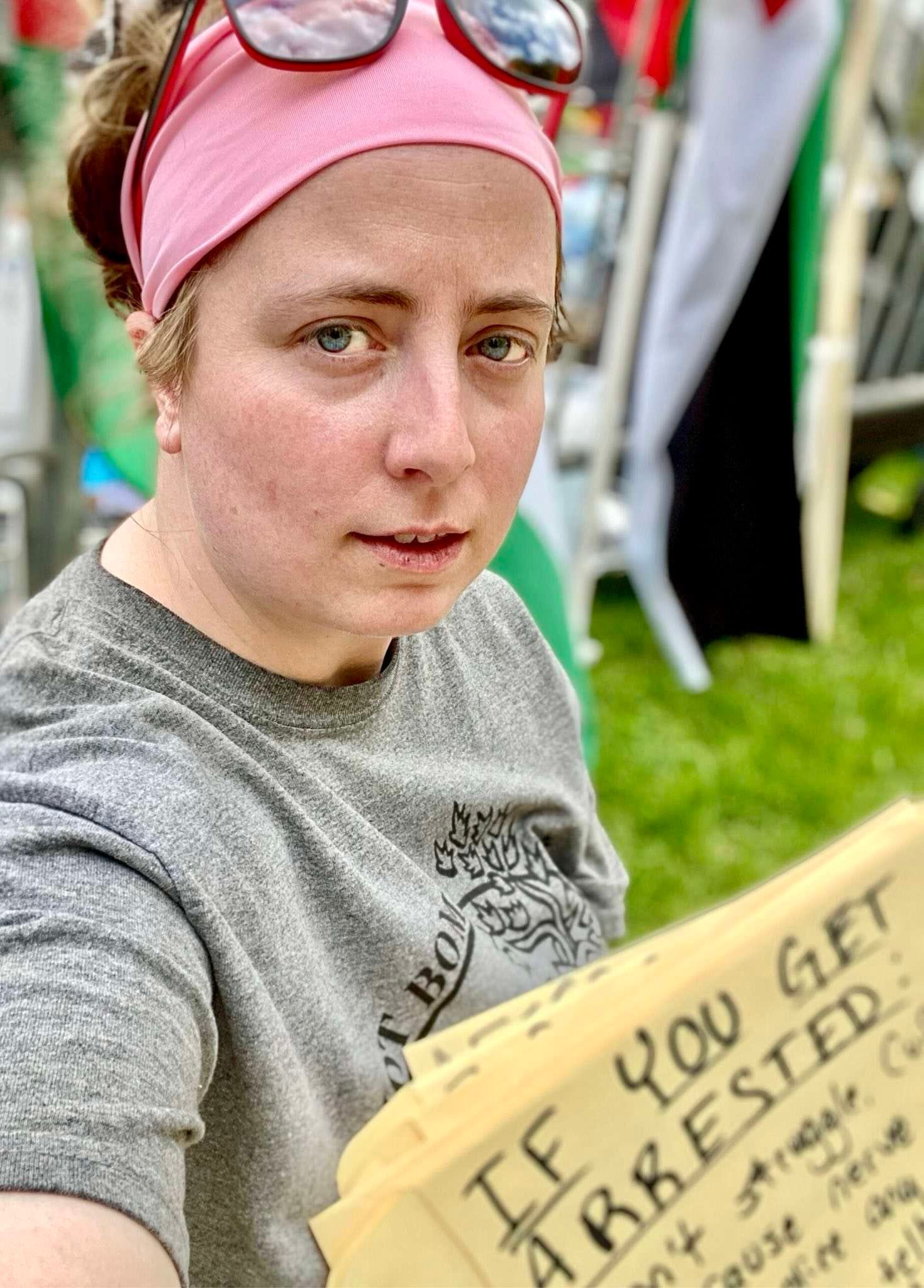
Maggie Rice’s first experience with protest ended before it began.
“The first protest I was ever supposed to go to was canceled,” Rice said, “because it was the day after the Cleveland Four were arrested.”
She was referring to a 2012 plot involving Occupy activists accused of attempting to blow up the Brecksville-Northfield High Level Bridge. The FBI said an informant infiltrated the group, supplied fake explosives and worked with members to select targets. Five men were later charged with terrorism.
Civil liberties advocates later questioned the FBI’s role in the case. Deb Kline of Jobs with Justice said she wondered “who else was pulling the strings of those in the group.” Michael German, a former FBI counterterrorism agent and then a senior policy counsel for the American Civil Liberties Union, said the government was “manufacturing threatening events” rather than preventing harm.
“Before 9/11,” German told Rolling Stone, “the FBI would have considered the idea of advancing terrorism plots just to defuse them as ‘laughable.’ But what was justified as an emergency method has become a normalized part of regular criminal-justice work.”
The FBI has acknowledged that its informant provided what the group believed to be explosives. Similar cases occurred in New York and Chicago, where men were convicted after an informant supplied what they thought were weapons.
“That is state repression right there in action,” Rice said. “It was entrapment by the FBI to destroy Occupy in Cleveland.”
Rice likened the FBI’s tactics to those used under COINTELPRO against the Black Panthers and other Black liberation groups in the 1960s and 1970s.
“Divisiveness was the best tool they used,” she said. “And they’ve only gotten better at it since.”
Rice traces her political awakening to the Occupy movement of the early 2010s, when she became interested in freedom of information and online activism. She followed the work of hacktivists who sought to expose corruption and make scholarly research freely available, including Aaron Hillel Swartz, a co-founder of Reddit and developer of RSS.
Swartz was arrested by MIT police and the U.S. Secret Service on Jan. 6, 2011, and later indicted on federal charges including wire fraud and unlawfully obtaining information from a protected computer. Rice described the potential penalties he faced as “disproportionate.”
“He was given charges that would have brought decades in prison,” Rice said. “In my mind, that fits the definition of a political prisoner.”
She said Swartz’s death by suicide in 2013 had a lasting impact on her.
“I was following his story day by day,” she said. “I started wondering if other political prisoners knew that people valued their sacrifice.”
Rice began writing letters to political prisoners and eventually heard back from Jeremy Hammond, a hacktivist serving a lengthy sentence. Hammond became what she called a “movement mentor” and later introduced her to activists with Food Not Bombs. This teaching relationship shaped her focus on mentorship and political education.
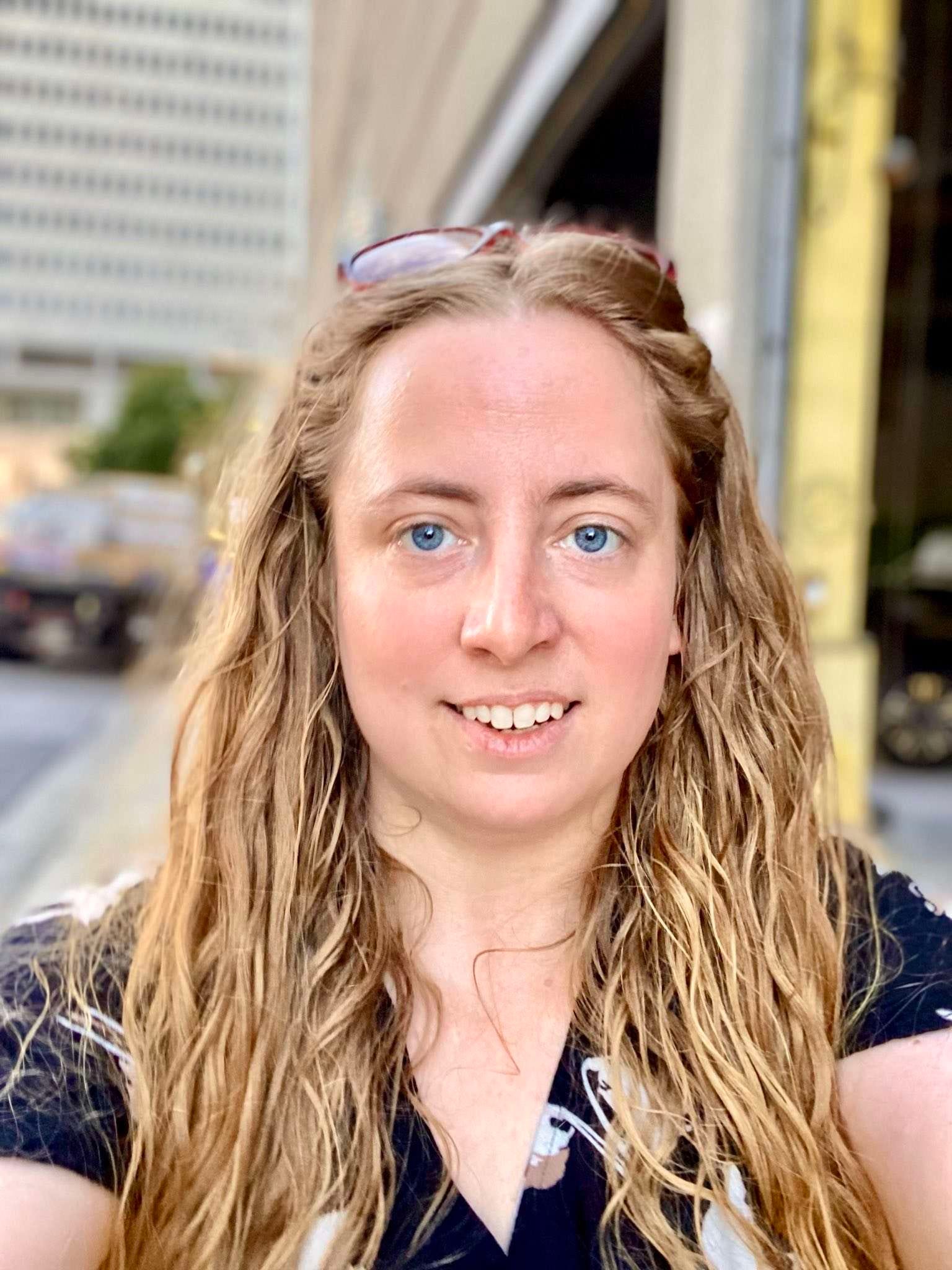
Rice now works as a freelance consultant for nonprofit, student and activist groups, helping people identify their values and strategies for social change. She said she got her start in political education through the Ann Braden Anti-Racist Organizer Training Program, run by the Catalyst Project. The program’s purpose is to train white activists to undo their own racist and imperialist tendencies, empowering them to bring their best selves forward into the multiracial liberation struggle.
For Rice, political education includes teaching people to recognize repression and protect themselves from it.
“Quite frankly,” she said, “Food Not Bombs is a mostly-white organization. We’re mostly working class, but college-educated. From the FBI’s point of view, that’s a great potential target for information on Black and Brown people. They think we’ll snitch. We absolutely did not. We know our rights.”
To counter surveillance and disruption, she encourages activists to prioritize in-person conversations and operational security rather than relying solely on online organizing. She said Food Not Bombs distributes The Troublemaker’s Guide to its leaders and holds discussions about the history and mechanics of state repression.
“For those who take on leadership in Food Not Bombs,” Rice said, “we talk about state repression. We give them The Troublemaker’s Guide, and practical ways to stay safe, as well as the history and politics behind state repression. For our new members, we point them to the National Lawyer’s Guild (NLG) to learn their rights, that they should never answer the door or answer questions, not even confirm their name.”
She said Food Not Bombs finds itself in the crosshairs of federal agencies “every four years,” at least.
“In 2016,” she said, “during the Republican National Convention in Cleveland, we were the targets of state repression.”
Rice said federal agents have knocked on the doors of Food Not Bombs activists. Because the group provides food support at protests and local resistance actions, members often know who is organizing and where. That visibility, she said, makes them targets.
“We did a press blitz,” she recalled, “at the advice of our lawyers, to publicly and loudly condemn what was happening, to let the FBI know we would not be an easy target.”
Rice’s Food Not Bombs chapter distributes produce, bread, hygiene products and pantry staples weekly in the St. Clair neighborhood on Cleveland’s East side, as well as in Willoughby in Lake County. The group does not require proof of income, sobriety, or any other self-identifying information. FNB also provides food at protests, which Rice said allows demonstrators to remain active longer. She and other volunteers have had confrontations with law enforcement over those efforts.
“Law Enforcement knows,” Rice said, “that if people are hungry and thirsty or in heat exhaustion, they’ll go home sooner. We were aware that we might be a target for that because of our connections.”
Food support, she added, is not incidental to repression — it is one of its reasons.
When discussing hunger, Rice emphasizes the difference between charity-based responses and justice-based solutions and encourages students to analyze root causes. Food Not Bombs frames hunger as the product of racism, colonialism, sexism, homophobia and transphobia — forces it describes as “racial capitalism” — and aims to address those systems rather than operate solely as a food charity.
“Over the years, the anti-hunger movement has lost its teeth,” Rice said, arguing that traditional charities often discourage broader political action.
For Rice, feeding people and confronting repression are inseparable.
Mutual aid, she said, builds the relationships that allow movements to survive — and that is precisely why it draws state attention.
“The point of repression is to break movements apart,” Rice said. “Our job is to keep people together.”